Posts

Showing posts with the label Milton

Exploring Early 20th Century Milton

Image
  Rear view of William Betts Building, now Milton Public Library A big part of what makes Milton a delightful stop on the Delaware Bayshore Byway is the diversity of his historic architecture. I have other blog posts on Milton’s oldest buildings  and its Victorian architecture . In this post, I share some of the buildings from the early 1900s that we saw during our visit, plus some recent improvements that impressed us. Like many other towns along the Delaware Bayshore Byway, Milton’s economy in the 1800s was largely water-based: shipbuilding, milling, and shipping ports. By the early 1900s, ships were made of steel instead of wood, and railroads and highways were used for shipping more than ports. So Milton’s shipping and shipbuilding industries closed, and today little trace remains of them. In the first half of the 20 th century, some of the mills persisted, and there were peach canning, scrapple, and button industries, but Milton never again prospered as much as it di...
Milton: Exploring Its Early Architectural Gems

Image
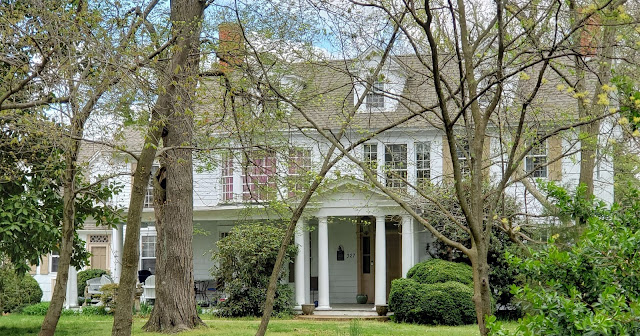
  Hazzard House in Milton Milton has too many things to see to cover in one blog post! My last blog post  focused on its delightful Victorian architecture. Here I’ll cover some of its earlier buildings. Milton was founded in 1686, when James Gray “patented” 100 acres at the navigable head of the Broadkill River. He named the town Milton after the English poet John Milton, who had died a few years earlier. I don’t think much more happened until the mid-1700s, when George Conwell and William Perry owned the land—Conwell on the north side of the Broadkill River and Perry on the south side. They laid the land out in lots that they sold. By the late 1700s, Milford was a small village, with mills and ports for lumber and agricultural products. Probably the oldest house we saw was  Hazzard House , also known as  Governor David Hazzard Mansion  and Governor’s Bed & Breakfast at 327 Union St. It’s pictured above. Its “core” was built around 1790 by Governor Hazza...

Milton: A Treasure Trove of Victorian Architecture

Image
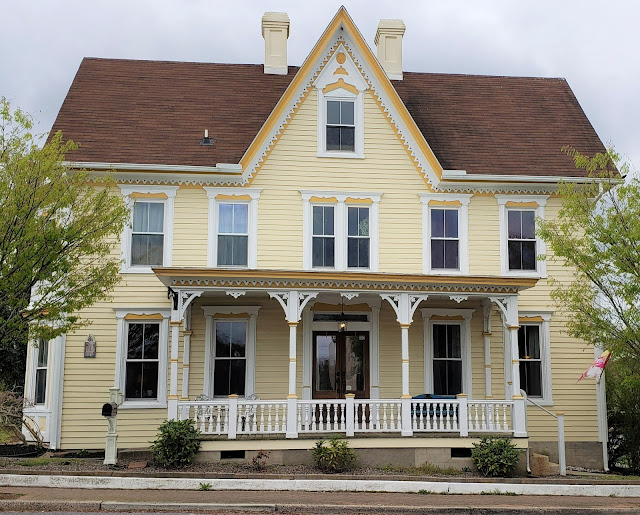
Noah Wiltbank Megee House Milton’s story is similar to those of many other towns along the Delaware Bayshore Byway. It was built along a river as a port and eventually a shipbuilding center. What makes Milton different is that its shipbuilding industry persisted into the early 1900s, when steel finally replaced wood as preferred ship construction material. Businesses building wooden ships would of course employ many skilled carpenters, and there’s a legend that the carpenters spent their off time building elaborate Victorian buildings. Whether this legend is true or not, today  Milton has an extraordinary collection of Victorian buildings that make Milton a delight for fans of Victorian architecture. There is so much to see that I’m covering earlier and later buildings in separate blog posts. What is Victorian architecture anyway? Technically it would be any architectural styles popular during the reign of Queen Victoria, from 1837 to 1901. But I think most Americans think of ...